
If you were convicted of a DUI in Arizona, the court or the MVD may require an ignition interlock device in your car. That news is stressful, mostly because of the cost and the daily hassle. This guide explains how an ignition interlock device works in Arizona, how long you may need one, what it costs, and the downsides to plan for.
This article is general information, not legal advice. Requirements depend on your test results, your history and the court that hears your case, so talk to a DUI attorney about your own situation.
What is an ignition interlock device?
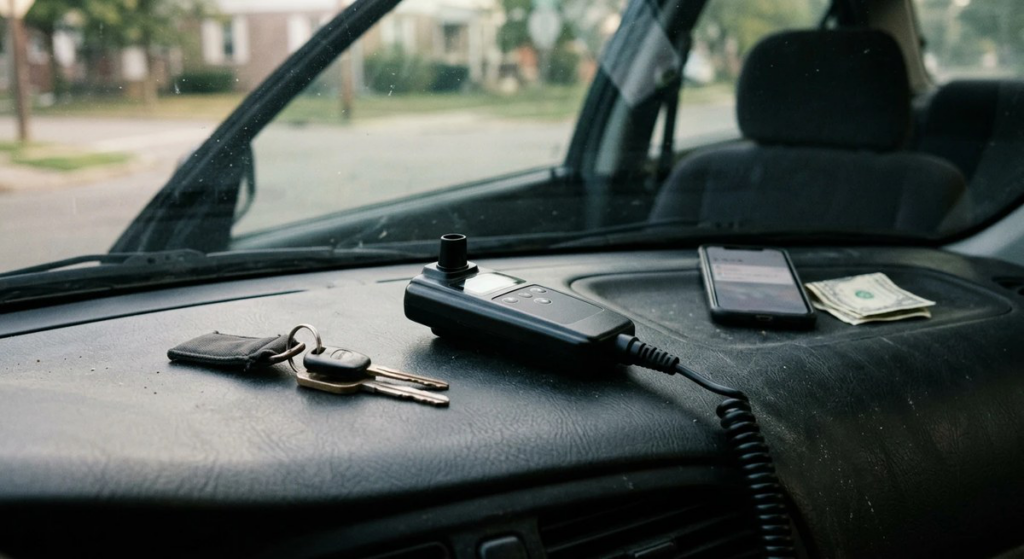
An ignition interlock device is a small breath-testing unit connected to your car’s ignition. Before the engine starts, you blow into a handheld mouthpiece. If the device detects alcohol above a very low limit, the car will not start.
The device also asks for random “rolling retests” while you drive. You must give a breath sample when it asks. Otherwise, the device records the miss and may sound an alarm. A state-certified installer must put the device in and service it.
How long do you need an ignition interlock device in Arizona?
Arizona law (A.R.S. § 28-3319) sets the time based on the type of DUI. In general, the periods are:
- 12 months for a standard DUI (BAC 0.08 or higher) or an extreme DUI (BAC 0.15 or higher).
- 18 months for a super extreme DUI (BAC 0.20 or higher).
- 24 months in more serious cases, such as a super extreme DUI with a prior conviction within seven years, or certain aggravated DUI charges.
The clock usually starts after you finish the required alcohol screening, education or treatment and are otherwise eligible to get your license back. However, if you hold a special ignition interlock restricted license, the time you drive with the device installed may count toward the total. Your own case may be different, so confirm the exact period with your attorney or the MVD.
How much is an interlock device in Arizona?
Short answer: expect about $70 to $150 to install, plus about $60 to $140 a month. Over a 12-month requirement, that is roughly $800 to $1,800.
Each provider sets its own prices, so the cost varies. Based on published provider and attorney estimates, you can expect roughly the following:
- Installation: about $70 to $150, paid once.
- Monthly lease and monitoring: roughly $60 to $140 a month.
- Possible extras: a deposit, a removal fee, or optional damage protection.
Over 12 months, that can add up to roughly $800 to $1,800, before you count the time for service visits. Therefore, ask each installer for a written quote that lists every fee. Also ask whether paying for a full year lowers the monthly price. Prices change, so treat these numbers as a starting point.
The downsides of an ignition interlock device
An interlock does its job, but it changes your daily routine. Here are the main cons people run into.
- It costs money every month. The installation fee is only the beginning. The monthly fee continues for the whole required period.
- Service visits take time. The device generally needs a calibration and inspection visit about every 30 days. Missing an appointment can cause license problems and may extend your required time.
- Rolling retests happen while you drive. They can come at inconvenient moments, so plan to respond safely.
- Everyday products can cause a false reading. Some mouthwashes and other products that contain alcohol can trigger a failed test. Failed tests are recorded, so wait a few minutes and rinse your mouth with water before you blow.
- It applies to every vehicle you operate. The requirement covers any vehicle you drive, not only your own car. Ask your attorney whether any exceptions apply to you.
- Violations can add time. Failed tests, missed retests and tampering are recorded and reported. Serious or repeated violations can extend your requirement.
- It can feel stressful or embarrassing. Some people feel self-conscious when passengers see the device. Others find the constant testing wearing.
Are there any upsides?
Yes, a few. First, the device lets many people keep driving to work, school and medical appointments while the requirement is in place. Since January 1, 2023, first-time offenders and some second-time offenders can apply for a special ignition interlock restricted license. Applying means giving up the right to contest the suspension at a hearing, so talk to an attorney first.
Second, some people with a standard DUI may qualify to shorten the interlock period. The conditions include completing an alcohol education program of at least 16 hours, keeping a clean record on the device, and not having been in an accident that caused injury or property damage. Extreme and super extreme cases do not qualify for this. Ask your attorney whether you do.
Tips to make an ignition interlock easier
- Get quotes from more than one MVD-certified installer near your home or work.
- Put your service visits on your calendar as soon as the device is installed.
- Check the labels on mouthwash and similar products for alcohol.
- Tell anyone who drives your car how the device works.
- Keep every receipt and form for the court and the MVD.
Screening, classes and counseling still come first
An interlock is only one requirement after a DUI. Most people must also complete an alcohol screening, and many are assigned education classes or counseling. Our guide explains how many hours of DUI classes you may need in Arizona. Because the interlock period usually starts after those steps, finishing them promptly helps you move forward.
Ahava Wellness Center is ADOT-approved and an ADHS-licensed outpatient treatment center in Central Phoenix. We provide DUI screening in Phoenix, court-ordered DUI classes and DUI counseling, and online DUI screening and classes. We then send your completion documents to the court or MVD. We do not install or service interlock devices, so you will need an MVD-certified installer for that.
Not sure what your court or the MVD requires? Call us at (602) 217-0061 or submit your details, and we will help you sort out the next step. You can also read our guide to a first DUI in Arizona and our DUI counseling FAQ.
Common questions about ignition interlock devices in Arizona
Can I drive someone else’s car with an interlock requirement?
The requirement applies to any vehicle you operate. Therefore, a car you drive regularly may need a device too. Ask your attorney about your situation before you drive anything that does not have one.
What happens if I fail a breath test?
The device records the attempt, and the car may not start. The provider can report violations. Serious or repeated violations may be passed to the MVD and can extend your required time.
Can I get the device removed early?
Possibly, but only in limited cases. A standard DUI may qualify for a shorter period if you meet the conditions listed above. Extreme and super extreme cases do not. Check with your attorney or the MVD before you ask an installer to remove anything.
Does the interlock replace DUI screening or classes?
No. The interlock is separate. You still need to complete the screening, education or counseling your court or the MVD requires.
Where do I get an ignition interlock device?
You must use an installer certified for Arizona. The MVD can point you to approved providers. Ahava does not install interlock devices.
Rules, prices and providers change, so confirm the current details with the MVD, your attorney or your court before you act. This article is general information, not legal advice.